Growing up means making more choices about your school, your goals, your future job, and what life could look like after high school. If you have an IEP in Tennessee, your team starts a transition plan by age 14, but here’s the important part: that plan should include YOU. This is your life, your voice, and your future. TNSTEP is here to help you learn how to speak up, join your IEP meetings, understand diploma options, explore careers, and start taking the wheel on your road to adulthood.


A transition plan is like a GPS for life after high school. It helps you and your IEP team think about your goals, your strengths, and what support you may need along the way.
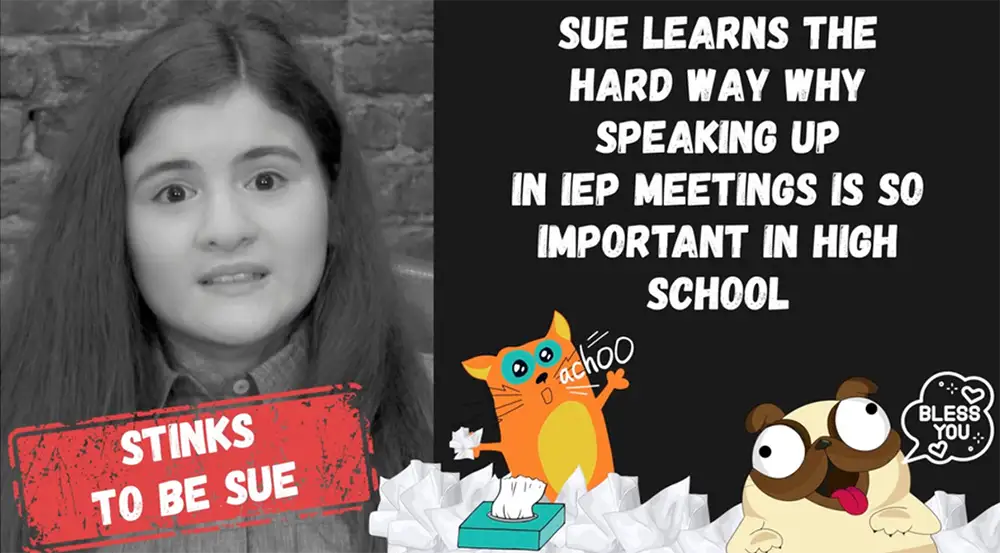
Sue has an IEP, a transition plan, and a big problem: nobody really asked Sue what she wanted for life after high school. Now she’s stuck in a Work-Based Learning job at an animal shelter, even though her allergies, anxiety, and autism make it a pretty rough fit. In Stinks to Be Sue, you’ll learn from Sue’s story so you can speak up, ask questions, and help make decisions about your own future before things get hairy.

Self-advocacy is a big word, but the idea is simple: it means learning how to speak up for yourself. Parents and caregivers play an important role in advocating for what their kids need at school and in life. As you get older, you can start building those skills, too, so you have a stronger voice in decisions about your future.
Self-advocacy means learning about your needs, your disability, your strengths, and the supports that help you do your best. It can help you take part in your IEP or 504 meetings, ask for accommodations, prepare for a job, explain what helps you succeed, and make choices about life after high school.
You do not have to figure it all out by yourself. Your parents, school team, and TNSTEP can help you learn how to use your voice and understand your options. Explore TNSTEP’s youth resources, check out one of our youth trainings, or reach out for one-on-one help. We are here to help you build the skills to speak up with confidence.
Bob was nervous, but he rocked his interview and got his first job as a grocery bagger at a local grocery store. Go, Bob!
During his first few days, Bob started to feel overwhelmed. The store was busy, customers were waiting, and he was trying to remember all the steps at once. At school, Bob had an IEP to help keep him on track , but he didn’t have that at work. He wanted to do a good job, but his anxiety was making it hard to focus.
Then Bob remembered something important: people cannot help you with what they do not know.
Bob asked his boss for a quick meeting. He explained that he learns best when directions are clear and written down. He asked if he could use a small checklist to help him remember the steps for bagging groceries, like heavy items first, cold items together, and eggs or bread on top. His boss said yes. With a simple checklist and a little extra practice, Bob felt more confident and did much better at work.
That is self-advocacy. Bob did not make excuses. He spoke up, explained what helped him, and asked for support so he could do his job well.
How independent are you? The answer may look different if you are 14, 18, or in your early 20s. It may also look different from one person to another, and that is okay. Growing independence does not mean doing everything by yourself. It means learning skills that help you take more control of your life.
Maybe you start by setting your own alarm, packing your backpack, asking a question in a meeting, or keeping track of your schedule. Later, you may work on bigger skills like planning a meal, managing money, using transportation, getting a job, or making appointments.
Some tasks have more steps than you might think. Cooking a meal is not just grabbing food from the pantry. You may need to choose what to make, check what you already have, buy what you need, make sure you have enough money, bring the food home, put it away, cook the meal, and clean up when you are done. That takes practice!
This is why transition planning matters. Your transition plan can help you build skills for life after high school, one step at a time.
TNSTEP has a checklist to help you see what skills you already have and what you may want to work on as you plan for a more independent life as a young adult. Check it out here: REALITY CHECK – AN INDEPENDENCE CHECKLIST


Life after high school can feel overwhelming. You do not have to figure it out alone.
TNSTEP helps youth with disabilities, special health care needs, and mental health needs through this exciting stage of growth, and our services are free.
We can help you explore your options for life after high school. This could include college, trade school, Vocational Rehabilitation, jobs, volunteer opportunities, community programs, and more.
Youth trainings
Join fun, youth-friendly trainings at school or online. Learn how to speak up, take part in planning meetings, ask for help, and plan for your future.
Tools you can use
Explore fact sheets, activities, checklists, and videos made to help you understand your choices and take your next steps.
One-on-one support
Need help thinking through your options? TNSTEP can help you prepare for life after high school, learn about resources, and get ready for big steps like finding and keeping a job.
Your parents, caregivers, school team, and TNSTEP can all be on your team. But this is your future, and your voice matters.
Check out some of our favorite youth resources below to get started.